Strip and wax, or burnish? How to tell what your floor actually needs
The wrong call costs you either a weekend of downtime you did not need, or a floor that keeps getting worse.
September 1, 2026 · 3 min read
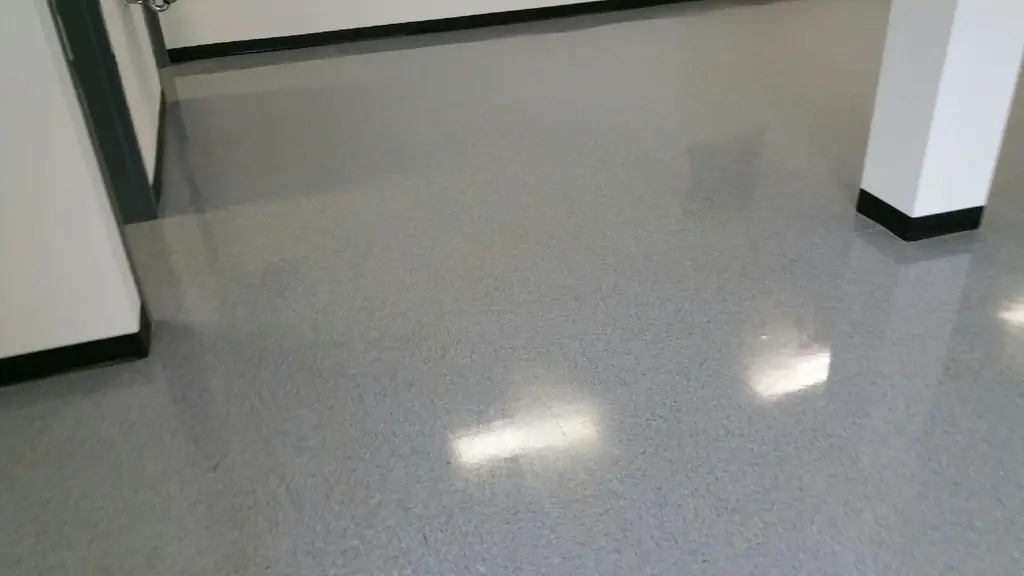
Most of the floor complaints we get in Decatur, Athens and Huntsville come down to one question that nobody asked early enough. Does this floor need stripping back to bare, or does it just need bringing back up? They are different jobs. They cost different money. They take different amounts of your building out of service. And picking the wrong one is the single most common way a business ends up spending more on its floors than it needed to.
What burnishing actually does
Burnishing works on the finish that is already there. A high speed machine passes over the sealed surface, heats it very slightly, and pulls the gloss back up out of it. Scuffs from cart wheels and heel marks disappear because they were never in the tile, they were in the top of the finish. The floor goes from dull and grey looking to reflecting the ceiling lights again, and it usually happens overnight.
The catch is that burnishing has nothing to work with if there is no finish left. Every burnish takes a little off the top. In a corridor that gets heavy traffic, you might burnish several times before the coats underneath are worn thin enough that you are polishing the tile instead of the finish. At that point the machine stops helping and you are just making noise.
What stripping actually does
Stripping takes everything off. Chemical goes down, the old finish softens, the machine breaks it up, the slurry comes off wet, and you are looking at bare tile. Then the floor gets sealed and gets its coats of finish back, and it has to dry properly between them. It is the job in the photographs on this site where the floor is under foam and there is a hose across the room.
It is a bigger job and it needs the space genuinely empty. That is the real cost for most businesses, not the invoice. It is the hours where nobody can walk on it.
How to tell which one you are looking at
There are a few honest signals you can check yourself before anybody quotes you.
- Look at the edges and the corners, not the middle. Finish wears from the traffic lanes inward. If the corners still look glossy and the middle looks flat, you still have finish and burnishing will probably bring it back.
- Look for grey. Grey is usually dirt trapped in worn finish. Yellow or amber usually means old finish that has built up and aged, and that is a stripping conversation.
- Check whether marks wipe out. If a black heel mark comes up with a damp cloth and pressure, it is sitting on the finish. If it does not move, it may be in the tile.
- Look at where the mop cannot reach, along the base of walls and under fixed furniture. Build up along those lines is a sign there have been coats on coats without a strip for a long time.
- Ask when it was last stripped. If nobody in the building knows, it has been too long.
The pattern that works
For most commercial buildings the sensible pattern is a strip and refinish on a long cycle, with burnishing in between to hold the look. How long the cycle runs depends entirely on your traffic. A school corridor and a back office in the same building are not on the same schedule, and a contractor who tells you otherwise has not walked your site properly.
The reason we push maintenance over rescue is not that it sells more visits. It is that a floor kept on a schedule never needs the big disruptive job at short notice, and the tile underneath lasts a great deal longer. Tile that has been protected by finish for twenty years is still tile. Tile that has been walked on bare is not.
What we would ask you
When we come out for an estimate we want to know the traffic, the hours you can give us, and what the floor is. Waxing, burnishing and refinishing, tile and grout, VCT, ceramic and cement floors all behave differently. We will tell you if burnishing will do it, because sending a crew to strip a floor that did not need stripping is a good way to lose a customer we would rather keep for another thirty years.
Estimates are free and we cover Decatur, Athens, Hartselle, Huntsville, Cullman, Moulton and the surrounding area.
Rainey's Cleaning Service & Lawn Care, (256) 227-2986
Call (256) 227-2986More articles
What after hours janitorial should actually cover, and what to get in writing
Most disputes about cleaning are not about effort. They are about a scope that never said who does what, or how often.
Post construction cleaning: the things that get missed after the builders leave
Construction dust does not settle once. It settles, gets disturbed, and settles again, which is why one clean is rarely one clean.